
Warm Homes Local Grant 2026: Eligibility, How to Apply and How It Compares With ECO4
ApplyFreeBoiler Team
ApplyFreeBoiler.uk is run by Reliant Energy Solutions Ltd, an ECO4 heating and insulation installer. We are paid by the energy supplier for each installation we complete under ECO4. We are not paid by households. We do not run the Warm Homes: Local Grant; your council does. See our funding policy.
Early disclosure
The Warm Homes: Local Grant (WHLG) is a government-funded scheme, run by local councils in England, that pays for free energy upgrades such as insulation, heat pumps, solar panels and smart controls in privately owned homes. You may qualify if your home has an EPC rating of D to G and either your household income is usually £36,000 a year or less, your home is in a qualifying low-income postcode, or someone in your household receives certain means-tested benefits. Under the July 2026 guidance, councils can spend on average up to £16,600 per home on insulation and other energy upgrades, plus up to £16,600 on low-carbon heating such as a heat pump.
Warm Homes Local Grant at a glance
- Where: homes in England only.
- Who runs it: local councils, with £500 million allocated for delivery from April 2025 to March 2028.
- Which homes: privately owned (owner-occupied or private rented) with an EPC rating of D to G.
- Who qualifies: household income usually £36,000 a year or less, or a qualifying low-income postcode, or certain means-tested benefits.
- What you get: free energy upgrades such as insulation, low-carbon heating like heat pumps, solar panels and smart controls.
- How much: average cost caps of £16,600 per home for energy upgrades and £16,600 for low-carbon heating (July 2026 guidance).
- How to apply: on the GOV.UK application page ; your council then usually contacts you within 10 working days.
Sources: GOV.UK Warm Homes: Local Grant policy page and the GOV.UK application page .
WHLG is not the “free boiler scheme”. That phrase usually means ECO4, which energy suppliers fund and which covers Great Britain (see our free boiler scheme guide and ECO4 scheme page). The two have different funders, different eligibility tests and different end dates, and the comparison table below sets them side by side. The government’s wider Warm Homes Plan follows on from schemes like this one; our Warm Homes Plan guide covers the bigger picture.
Who is eligible for the Warm Homes: Local Grant?
You need a privately owned home in England with an EPC rating of D to G, and your household must meet at least one of three tests: income, postcode or benefits. The home tests are the same for everyone; the income, postcode and benefits tests are alternatives to each other.
Where you live: England only
WHLG covers homes in England. Scotland, Wales and Northern Ireland have their own programmes. If you are elsewhere in Great Britain, ECO4 is the scheme to look at instead, because it covers Great Britain.
Your home: privately owned, EPC D to G
The scheme is for privately owned homes, meaning owner-occupied homes and private rented homes. An Energy Performance Certificate (EPC) rates a home from A (most efficient) to G (least efficient), and WHLG is aimed at homes in bands D to G. You can look up your rating on the GOV.UK find an energy certificate service . If you rent privately, the scheme can still apply, but the upgrades are made to your landlord’s property, so raise it with them early. Park homes can qualify too, if the park home is your permanent home and its energy performance is equivalent to EPC D to G.
Landlords and private tenants
The grant fully funds one home per private landlord. For each further home the same landlord upgrades, the landlord pays 50% of the cost. Tenants are not expected to pay anything, and the landlord completes a declaration form for the council. Council and housing association homes are not eligible, apart from a small number included as in-fill in area projects (policy guidance, July 2026 ).
Test 1: household income
Your gross household income, before tax, is £36,000 a year or less. Every adult in the household counts, except lodgers and adults in full-time education, and disability benefits such as Attendance Allowance, Disability Living Allowance and Personal Independence Payment are left out of the sum.
That is why GOV.UK says “usually”: a household above £36,000 can still qualify if its income after tax and rent or mortgage is below the line for its size. The line is £20,000 for one or two adults, £28,000 for two adults with two dependants and £36,000 for two adults with four dependants (full tables in the policy guidance ). The council checks evidence such as payslips; a self-declaration is not accepted.
Test 2: an eligible low-income postcode
If your home is in one of the 20% most income-deprived areas of England, you qualify on the postcode alone, with no income check. These are income deciles 1 and 2 of the Indices of Multiple Deprivation, and the government publishes the full list of eligible postcodes as a spreadsheet on its Warm Homes: Local Grant page . If you are unsure, apply on GOV.UK and your council checks your eligibility.
The list was updated in February 2026 with 2025 deprivation data, and since April 2026 new applications are checked against the new list. A postcode that counted before may have dropped out, and some new ones are in. The council still checks your address, ownership and EPC rating, and it can turn down a household with high savings or valuable assets.
Test 3: certain means-tested benefits
Someone in your household, other than a lodger or an adult in full-time education, receives one of these:
- Housing Benefit
- Income-based Jobseeker’s Allowance (JSA)
- Income-related Employment and Support Allowance (ESA)
- Income Support
- Pension Credit (Guarantee Credit or Savings Credit)
- Universal Credit
Councils can also accept a household that meets ECO4 Flex Route 2 (two or more low-income indicators) if the home is rated EPC E to G. The list is shorter than ECO4’s: Child Benefit, for example, does not count for the Warm Homes: Local Grant. The ECO4 list is covered in the which to apply for first section.
Is the Warm Homes: Local Grant means tested?
Partly. The income and benefits routes need evidence, and the postcode route needs no income check. You do not have to be on benefits to qualify. There is no savings limit in the rules, but councils can decline a household with high savings or valuable assets, because the money is meant for homes at risk of fuel poverty.
What can the Warm Homes: Local Grant pay for?
It pays for free energy upgrades: insulation, low-carbon heating such as heat pumps, solar panels and smart controls. The aim is a warmer, more efficient home, which is why it is aimed at homes rated D to G.
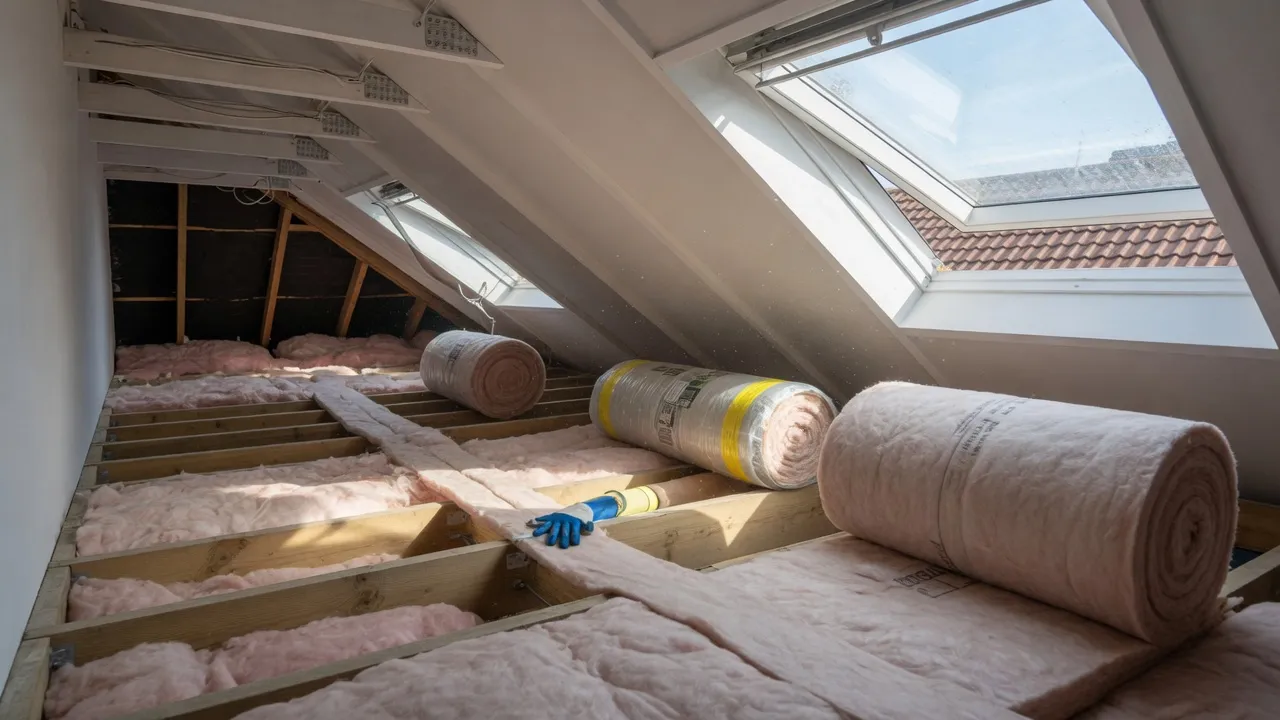
- Insulation and draught-proofing. Stops heat escaping through the loft, walls and floors, so the home holds warmth for longer. Double glazing and energy-efficient doors also count as energy performance measures. Our insulation grant guide explains the main types.
- Low-carbon heating, such as heat pumps or high heat retention storage heaters. Electric heating that moves or stores heat rather than burning fuel. Heat pumps generally suit homes that already hold heat well, which is one reason insulation often comes first. See our air source heat pump grant guide.
- Solar panels and batteries. Generate and store electricity at home, which can reduce how much you draw from the grid.
- Smart controls. Heating controls that help you heat the home only when and where you need to.
Which of these your home is offered depends on the property and on what your council’s scheme delivers. Nobody can promise a particular measure before your home has been looked at, and we do not either.
Does it pay for a new gas boiler? No. The scheme only funds measures that do not burn fossil fuel. A hybrid system can be fitted to a home on mains gas, but where it needs a new gas boiler, only the heat pump part is funded (policy guidance ). A replacement boiler is what most people mean by “free boiler”, and that is an ECO4 conversation, where a survey decides what is funded. ECO4 ends on 31 December 2026. Browse the wider grants directory for other routes.
How much can you get from the Warm Homes: Local Grant?
Up to £16,600 for energy performance upgrades and up to £16,600 for low-carbon heating, as averages per home. Those are the scheme’s two cost caps in the July 2026 policy guidance, raised from £15,000 each to allow for inflation, so guides that still quote £15,000 are out of date.
- Energy performance cap, £16,600: insulation, draught-proofing, double glazing, energy-efficient doors, solar panels, smart controls and batteries.
- Low-carbon heating cap, £16,600: heat pumps and high heat retention storage heaters.
- Averages, not vouchers: councils must meet the caps on average across their project, so one home can cost more and another less. Nobody is promised a set amount.
- No cash to you: your council arranges and pays for the work. You are not given money to spend, and you do not need to find your own installer.
- Who pays anything: owner-occupiers and tenants are not expected to contribute. Private landlords get one home fully funded and pay 50% of the cost of each further home.
Source: Warm Homes: Local Grant policy guidance, July 2026 .
How to apply for the Warm Homes: Local Grant
Apply on the official GOV.UK Warm Homes: Local Grant page ; your council then contacts you. You do not apply through us, and you should not need to pay anyone to apply.
- Check your EPC rating. The scheme is aimed at bands D to G. Look yours up on the GOV.UK EPC service .
- Work out which test you meet. Income, postcode or benefits: you need one of them, not all three.
- Have your evidence ready. Proof of identity, ownership or residence and your EPC, plus proof of your benefit or household income if you use those routes.
- Apply on GOV.UK. Use the official application page rather than an advert, a cold call or a text message.
- Wait for your council to contact you. GOV.UK says this usually happens within 10 working days. If you have not heard, ask the council directly.
- Follow what your council tells you. It will explain the next steps when it makes contact.
Is the Warm Homes: Local Grant available in my area?
Councils had to apply for funding, and GOV.UK publishes the list of local authorities allocated funding . If your council is not on it, or its scheme is full, ask about ECO4 Flex (LA Flex), and check ECO4 before it closes on 31 December 2026.
Warm Homes: Local Grant phone number
GOV.UK’s assisted digital support helpline is 0800 098 7950, Monday to Friday 8am to 6pm and Saturday 9am to 12pm, except bank holidays. It helps with using the online service; questions about your application go to your council.
Be wary of anyone who claims to be “the government grant” and asks for money or bank details. If installers are involved at any stage, you can check them on TrustMark and, for gas work, the Gas Safe Register . Our guide on whether the free boiler grant is a scam lists the warning signs.
Funding period: £500 million, April 2025 to March 2028
The government has allocated £500 million to the Warm Homes: Local Grant, to be delivered between April 2025 and March 2028. This is set out on the GOV.UK policy page .
That is the scheme’s funding period: it describes when the money is meant to be delivered. Treat it as the scheme’s window rather than a personal deadline, and not as a promise about when your council will reach you. Councils deliver the scheme locally, so timing for your home is a question for your council.
For comparison, ECO4 has a firm end date of 31 December 2026 (Ofgem ). The earlier end date is the main reason to check ECO4 first, which the which to apply for first section explains. Our guide to what the ECO4 deadline means covers it in more detail.
What happened to GBIS?
The Great British Insulation Scheme closed on 31 March 2026, and measures had to be completed before 1 April 2026. Ofgem confirms the details on its GBIS page . GBIS funded mainly single insulation measures.
The official pages do not confirm a direct replacement. The live routes are ECO4, which runs to 31 December 2026, and the Warm Homes: Local Grant. If you were hoping for a single insulation measure, WHLG’s insulation offer is one place to look. ECO4 takes a whole-house approach instead, and cavity wall insulation is an eligible ECO4 measure, with minimum insulation preconditions before certain heating measures (see Ofgem’s ECO4 delivery guidance ).
Background on the closed scheme is in our Great British Insulation Scheme guide.
What Happened to the Home Upgrade Grant (HUG2)?
The Home Upgrade Grant Phase 2 (HUG2) has closed. It ran in England from April 2023 to March 2025 and is no longer taking applications. If you are looking for a home upgrade grant now, the Warm Homes: Local Grant is the scheme your council delivers instead.
Under HUG2, local authorities bid for up to £630 million of funding. It was for low-income households living off the gas grid in homes rated EPC D to G, and private landlords had to pay at least a third of the cost. The Warm Homes: Local Grant covers low-income homes in England on and off the gas grid, with delivery from April 2025, so unlike HUG2 it is not limited to homes off the gas grid. The eligibility tests above set out who qualifies.
| Scheme | Dates | Homes covered | Status |
|---|---|---|---|
| Home Upgrade Grant Phase 2 (HUG2) | April 2023 to March 2025, England | Low-income households off the gas grid, EPC D to G. Private landlords paid at least a third of the cost | Closed to applications |
| Warm Homes: Local Grant | Funding period April 2025 to March 2028, England | Low-income homes on and off the gas grid, EPC D to G | Delivered by councils; whether it is open depends on your council |
Source: GOV.UK Home Upgrade Grant Phase 2 . To apply for the Warm Homes: Local Grant, follow the how to apply steps and use GOV.UK.
Warm Homes Local Grant vs ECO4: comparison
The short version: WHLG is government money delivered by councils in England, while ECO4 is supplier-funded support across Great Britain that ends on 31 December 2026.
| Dimension | Warm Homes: Local Grant | ECO4 |
|---|---|---|
| Who funds it | The government, delivered through local councils | Energy suppliers, under the Energy Company Obligation overseen by Ofgem |
| Area | England only | Great Britain |
| Homes covered | Privately owned (owner-occupied or private rented), EPC D to G | Generally EPC D to G, with separate rules for private rented and social housing |
| Eligibility basis | Household income usually £36,000 a year or less, or a qualifying low-income postcode, or certain means-tested benefits | A qualifying benefit, or ECO4 Flex (LA Flex) where your council has opted in and refers you |
| What it pays for | Insulation, low-carbon heating such as heat pumps, solar panels, smart controls | A whole-house approach to the least efficient homes; cavity wall insulation is an eligible measure |
| Funding per home | Average caps of £16,600 for energy upgrades and £16,600 for low-carbon heating | No published amount per household; it depends on the measures a survey recommends |
| End date | £500 million funding period, April 2025 to March 2028 | 31 December 2026 |
| Where to start | GOV.UK application page ; your council then contacts you | An eligibility check, such as ours, then a survey |
| Can you get both? | Do not assume so. A survey or your council decides what your home can receive under each scheme, and the schemes have separate rules. | |
Primary sources: GOV.UK Warm Homes: Local Grant , Ofgem ECO , Ofgem: ECO for homeowners and tenants and Ofgem ECO4 delivery guidance .
Which should you apply for first: WHLG or ECO4?
Check ECO4 first, because it ends on 31 December 2026 while WHLG’s funding period runs to March 2028. WHLG is the one to look at if you are over the benefit route but within the WHLG income line (usually £36,000 a year or less).
If you receive a qualifying ECO4 benefit
ECO4 Help to Heat for private housing recognises Child Benefit (subject to an income threshold), Housing Benefit, income-based Jobseeker’s Allowance, income-related Employment and Support Allowance, Income Support, Pension Credit (Guarantee Credit or Savings Credit) and Universal Credit. See Ofgem’s list . Start with our eligibility check or the ECO4 scheme page, and see our guides for Pension Credit and pensioners and Housing Benefit, ESA and JSA.
If you do not receive a qualifying benefit
ECO4 Flex (LA Flex) lets councils, and suppliers, refer households who do not get a qualifying benefit. Councils opt in and publish a Statement of Intent. The routes are: Route 1, gross annual household income under £31,000; Route 2, proxy targeting such as deprived-area measures; Route 3, a health condition made worse by living in a cold home; and Route 4, bespoke targeting (see Ofgem’s ECO4 delivery guidance ). Whether you can use any of them depends on whether your council has opted in. Our LA Flex scheme page and Statement of Intent guide explain how to find out.
If your income is over the benefit route but within the WHLG line
The WHLG income test and the ECO4 Flex income route are separate tests, so a household can meet one and not the other. If you get no qualifying benefit and your household income is usually £36,000 a year or less, apply for WHLG on GOV.UK . It does no harm to check ECO4 as well, but do not assume you will be offered both.
Check your ECO4 eligibility
ECO4 is the time-limited one, so it is the sensible first check. Our free, no-obligation eligibility check shows whether you may qualify for ECO4 or LA Flex. If the Local Grant is the better fit, it tells you so and links to the GOV.UK service. You may qualify; a survey decides what is funded.
Step 1 of 5
Who runs this site (and what we are not)
ApplyFreeBoiler.uk is run by Reliant Energy Solutions Ltd, an ECO4 heating and insulation installer. We are paid by the energy supplier for each installation we complete under ECO4. We are not paid by households. Read our funding policy for the detail.
Because we install under ECO4, we have an interest in ECO4 and you should weigh what we say accordingly. That is why the WHLG links on this page go straight to GOV.UK, and why we say plainly that we do not run the Warm Homes: Local Grant. We are not the UK Government, your council, Ofgem or an energy supplier.
FAQ
Next step
ECO4 runs to 31 December 2026, WHLG’s funding period runs to March 2028, and GBIS has closed. Check ECO4 first, then apply for WHLG on GOV.UK if you are within its income line.